If you've ever come in with low back pain and left the treatment room wondering why the needles went in your hands and feet instead of your back, you're not alone. It's one of the most common questions I get from new patients and it points to one of the more fascinating (and effective) approaches in acupuncture: distal treatment.
What Is Distal Acupuncture?
Distal acupuncture means treating pain or dysfunction using points that are far away from the area that actually hurts. For low back pain, that might mean needling points on the hands, the ears, or the lower legs and feet, nowhere near the lumbar spine itself.
It sounds counterintuitive. If your back hurts, shouldn't we treat your back? Sometimes, yes. But distal treatment isn't a workaround or a lesser option. It's actually a deliberate strategy rooted in both classical Chinese medicine theory and, increasingly, modern pain science.
The Traditional Explanation: Channels Connect the Body
In Traditional Chinese Medicine, the body is mapped by channels (often called meridians): pathways along which qi and blood are thought to flow. These channels aren't confined to the area they pass through; they connect distant regions of the body in ways that don't always match up with Western anatomical maps.
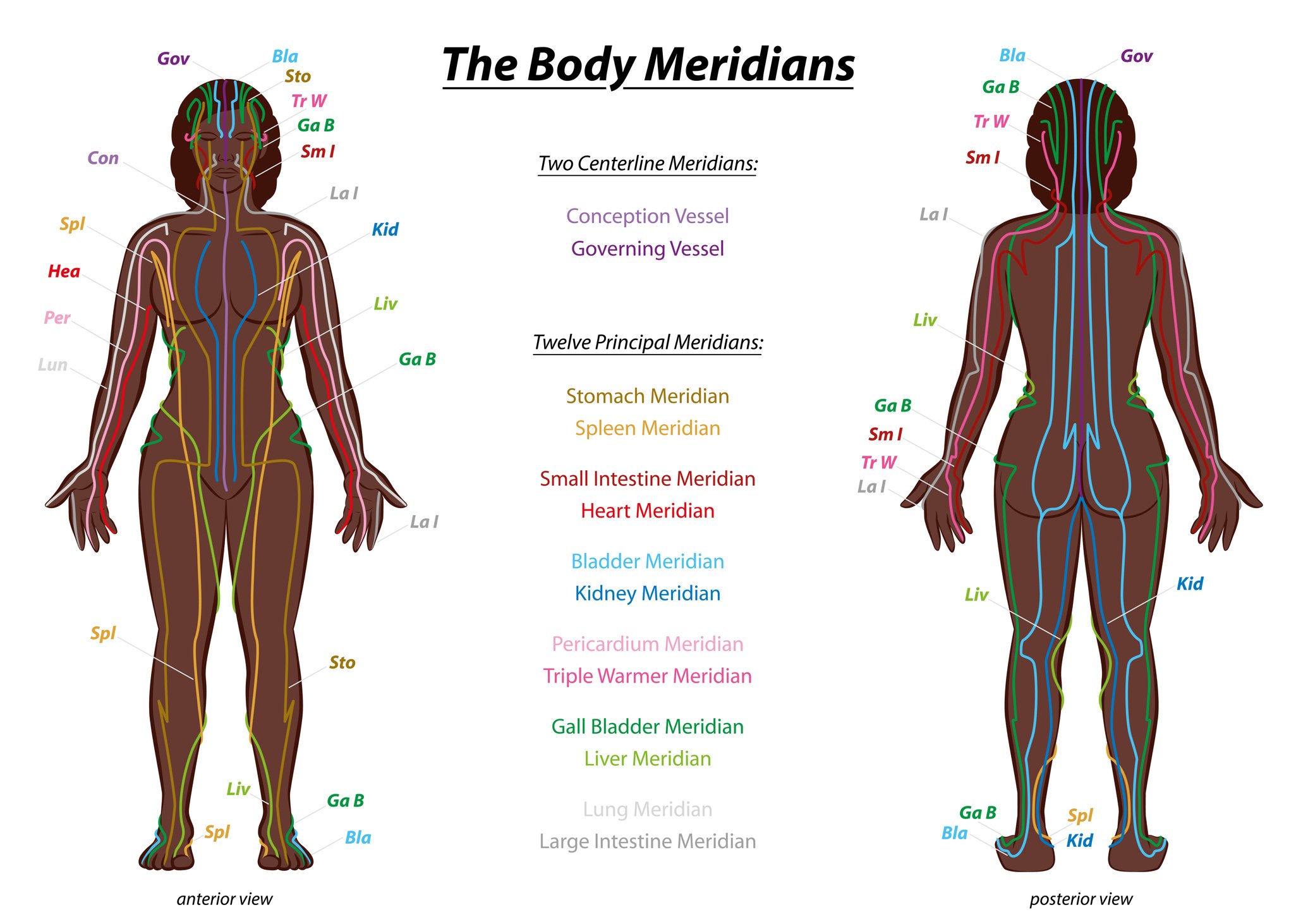
Map of body meridians
A channel that runs through the back may also pass through the hand or the back of the knee. By needling a point along that same pathway, even far from the site of pain, we're influencing the flow along the entire channel, including the segment that runs through the painful area.
A few systems that use this principle:
Channel theory – selecting points based on which meridian the pain falls along, then treating that same channel elsewhere in the body
The balance method – often using the opposite side of the body from where the pain is (right hand for left-sided back pain, for example), based on the idea that the body seeks equilibrium between its two sides
Master Tung's points– a system of extra points, many on the hands and feet, each associated with specific areas or conditions elsewhere in the body
Auricular (ear) acupuncture– treating the ear as a microsystem that represents the entire body, so a specific point on the ear can correspond to the low back
The Modern Explanation: How This Fits With Pain Science
For patients who want a more physiological answer, there's research to support why distal points can influence pain elsewhere in the body:
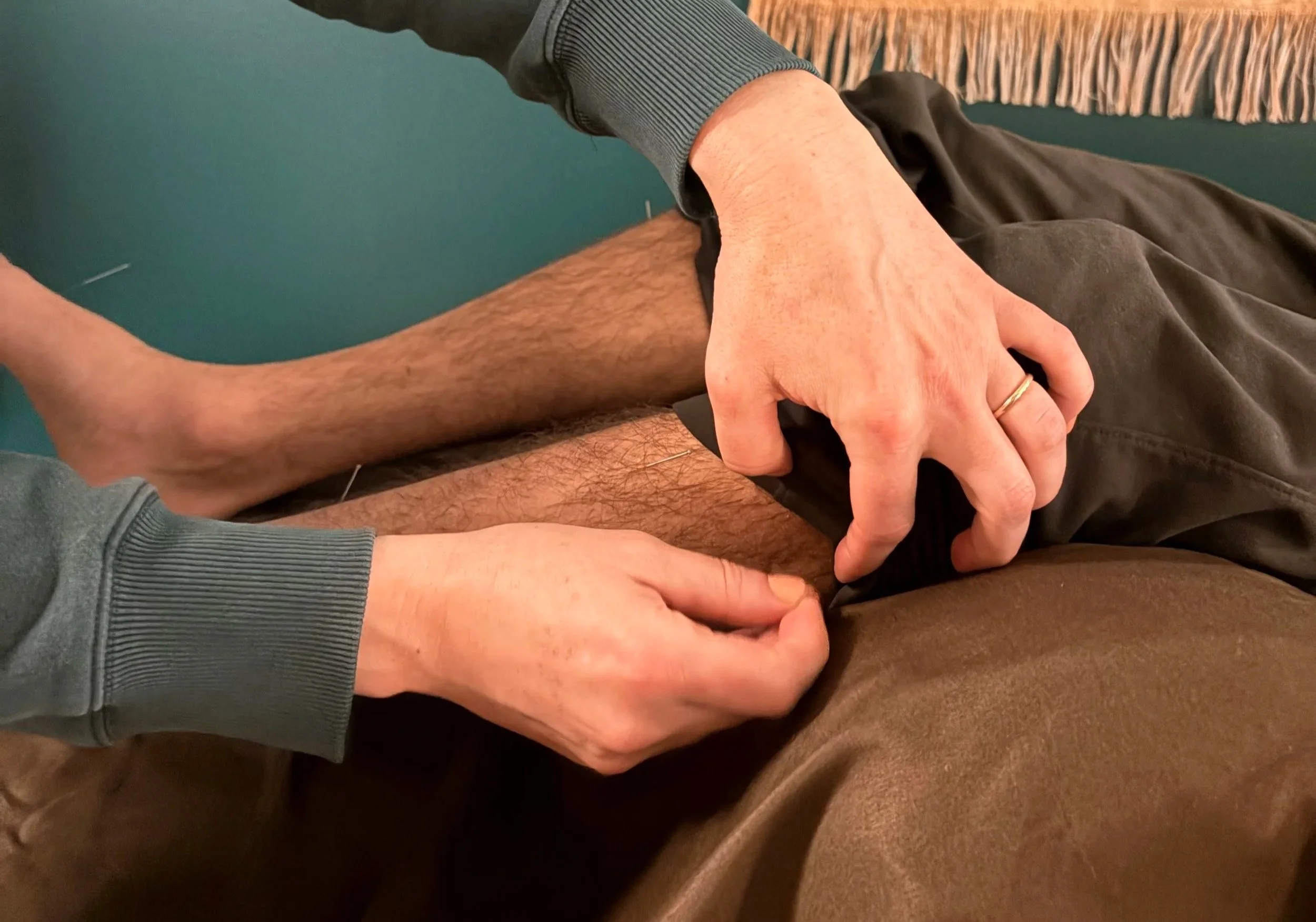
Gate control theory suggests that stimulating certain nerve fibers can interfere with pain signals traveling to the brain, effectively "closing the gate" before the sensation of pain fully registers.
Diffuse noxious inhibitory control (DNIC), sometimes called counter-irritation, describes how stimulating one part of the body can trigger a broader, whole-body pain-modulating response, reducing sensitivity in other areas.
Some neuroimaging studies have shown that needling distal points activates brain regions involved in processing pain and in the body's own descending pain-inhibition pathways.
The evidence varies in strength depending on the condition and study design, but the overall picture supports what acupuncturists have observed clinically for centuries: points far from an injury can still meaningfully affect it.
Why This Approach Is Genuinely Useful in the Clinic
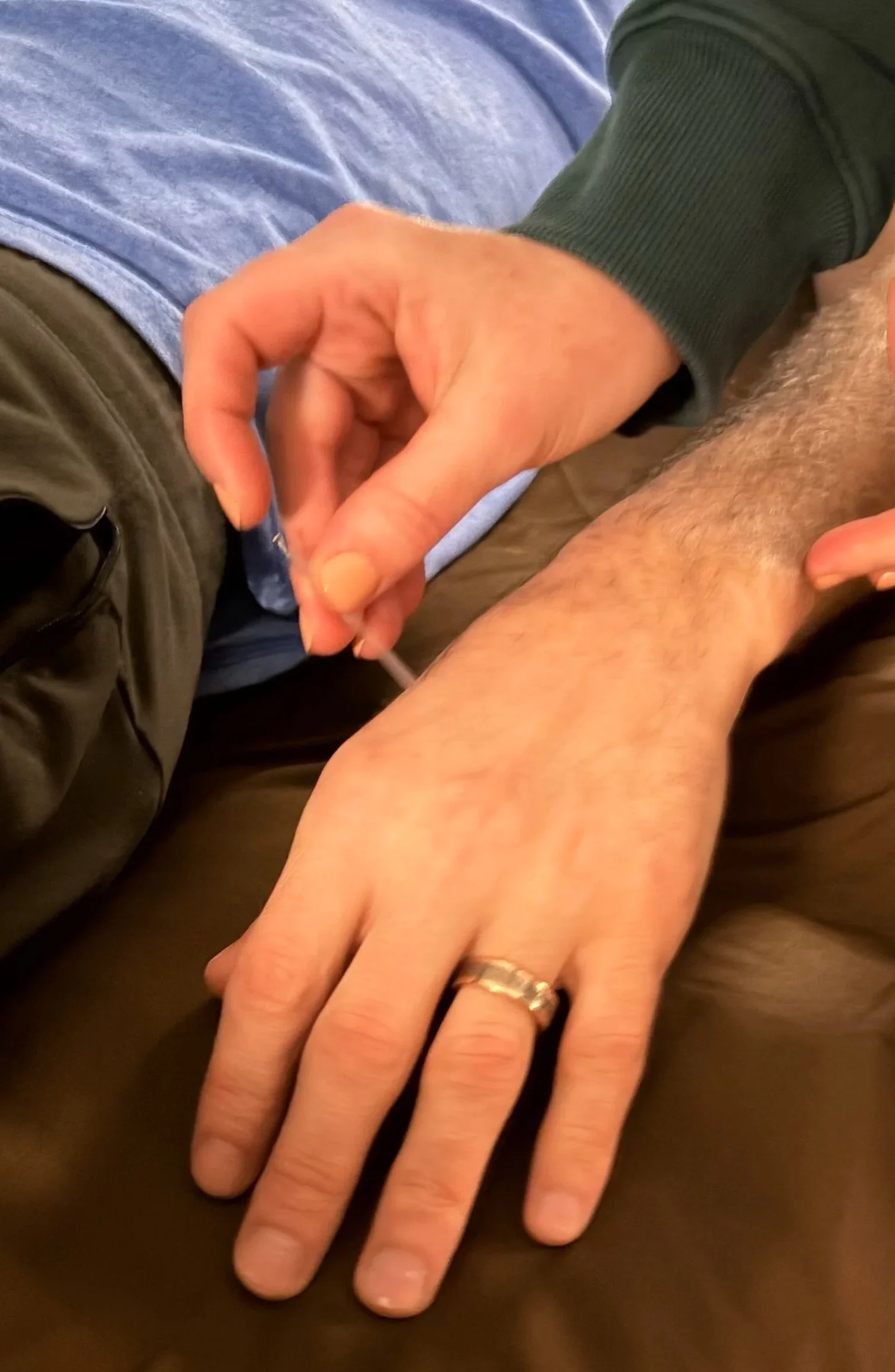
Beyond the theory, distal acupuncture has some real practical advantages:
It allows treatment of acute, guarded pain.
If someone's back is in spasm and they can't comfortably lie flat, treating the hands or feet means we don't have to ask them to get into a painful position just to start treatment.
It avoids needling already irritated tissue.
Inflamed or acutely injured areas can be sensitive to direct needling. Distal points let us influence the area without adding to local irritation.
It allows movement during treatment.
With needles in the hands or feet rather than the back, many patients can gently move or stretch the painful area, while the needles are in, something we sometimes use intentionally, since movement paired with treatment can enhance the response in some cases.
A Few Classic Examples…
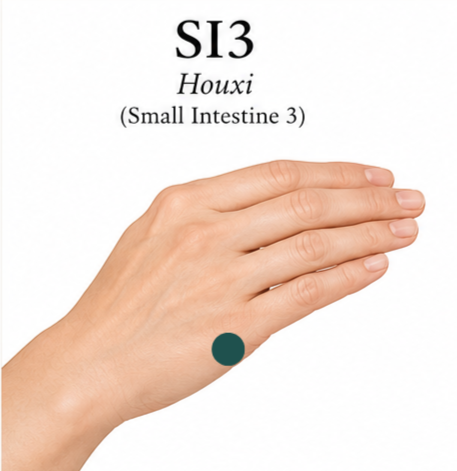
SI-3 (Houxi) for neck pain
Located on the hand, along the outer edge near the base of the pinky. SI-3 is one of the most commonly used distal points for neck and upper back stiffness, including stiff neck from sleeping wrong or postural strain. It's also known as one of the opening points for the Governing Vessel (also called DU meridian), a channel that runs along the spine, which is part of why it has such a strong effect on neck and spinal tension despite being nowhere near the neck itself.
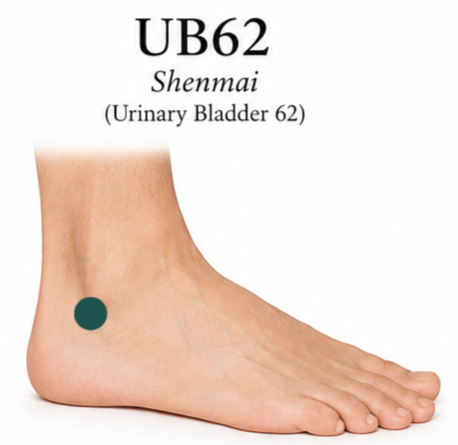
UB-62 (Shen mai) for low back pain
Found just below the outer ankle bone. This point is traditionally used for low back pain, especially pain along the sides of the spine or pain that worsens with certain movements. Like SI-3, it's also an opening point: this time for the Yang Heel Vessel, one of the extraordinary channels associated with the back and legs.
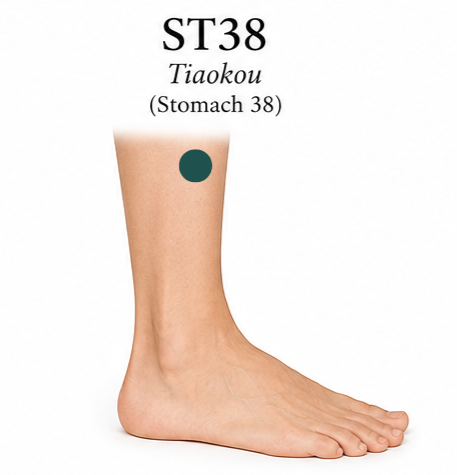
ST-38 (Tiaokou) for shoulder pain
Located on the lower leg, roughly midway between the knee and ankle. ST-38 is a well-known point for frozen shoulder and shoulder pain that limits range of motion. We needle the opposite side of the shoulder pain. It's often used while the patient actively moves or rotates the shoulder during treatment, which practitioners feel helps "unstick" restricted movement in real time.
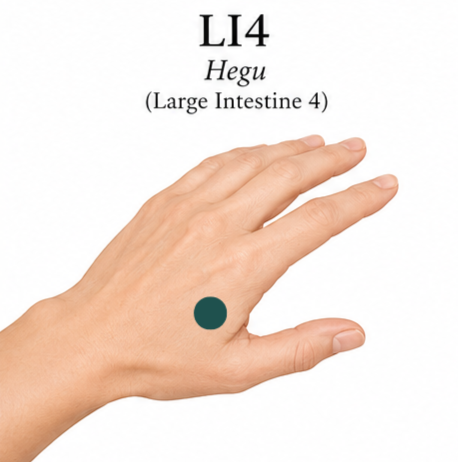
LI-4 (Hegu) for headaches and facial pain
Located on the hand, in the webbing between the thumb and index finger. LI-4 is one of the most widely used points in all of acupuncture, known for its strong effect on headaches, facial pain, sinus congestion, and toothaches. It's a great example of how a single point on the hand can influence the entire head and face, a connection that traces back to the Large Intestine channel's pathway up through the neck and face. (Note: LI-4 is traditionally avoided during pregnancy.)
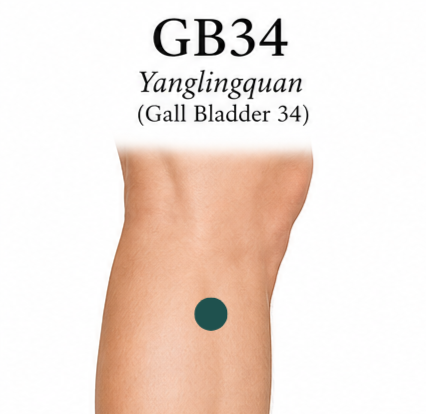
GB-34 (Yanglingquan) for hip and leg pain
Found on the lower leg, just below the outer part of the knee. GB-34 is considered a key point for tendon and sinew issues throughout the body, and is commonly used for hip pain, sciatica, and general leg weakness or cramping. It's sometimes called the "influential point for tendons," reflecting its broad use for musculoskeletal tension anywhere in the body.
What This Might Look Like for You
So if you come in with neck stiffness, low back pain, shoulder tightness, headaches, or hip pain, don't be surprised if very few (or none) of the needles go anywhere near the area that actually hurts. We might use points like SI-3, UB-62, ST-38, LI-4, or GB-34 instead.
It's not a trick, and it's not because we're avoiding the problem area. It's a deliberate, time-tested strategy, one that modern research is increasingly helping to explain. So the next time you're on the table and the needles go in your hand or foot instead of your back, you'll know exactly why!